March 28, 2025
Notes on Turn the Ship Around!
Leadership works better when people don’t wait to be told what to do.
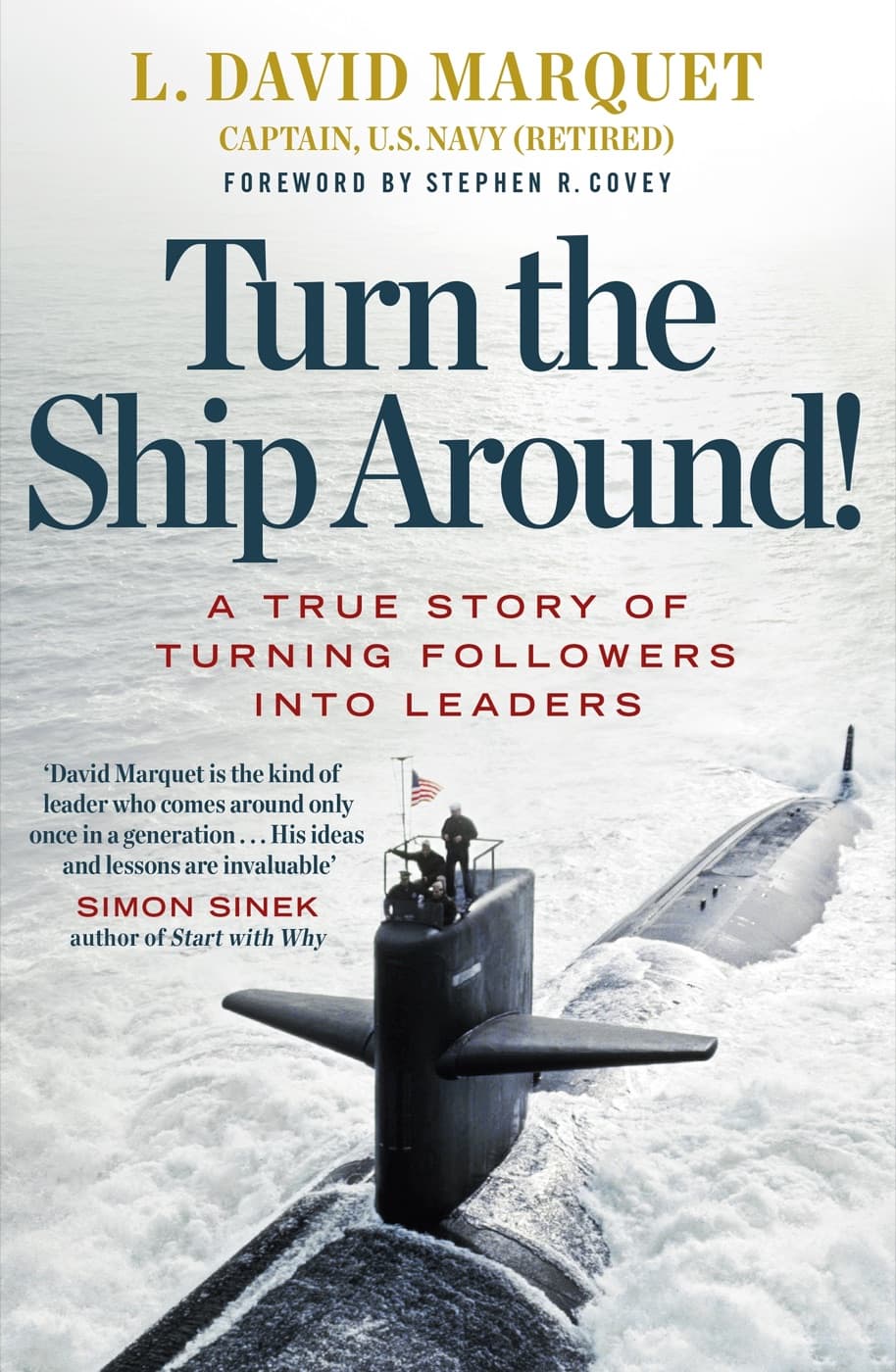
I read Turn the Ship Around! by L. David Marquet, about his time commanding the USS Santa Fe. These are the ideas I kept coming back to.
Volunteering
A person’s genius, passion, loyalty, and tenacious creativity can only be volunteered. You can order compliance. You can’t order someone to care.
The world’s biggest problems will be solved by passionate people who are free to bring all of themselves to the work.
Empowering others
Marquet writes that attempts to empower him felt like manipulation. The word itself assumes one person holds the power and gets to decide when somebody else can have it.
His argument is that people are naturally empowered. Most organizations have just spent a long time actively disempowering them.
“Do you need someone to empower you?”
Leaders can be wrong
The story that landed hardest for me happens when Marquet orders “ahead two-thirds” on a submarine that doesn’t have that setting. The officer repeats and affirms the order anyway.
When Marquet asks why, the officer tells him it was because the captain said so. He assumed Marquet must have learned something secret in commanding officer school that only captains knew.
When the leader is wrong, everybody can follow them right off a cliff.
Can you remember a time when someone followed your order because they assumed you knew something reserved for executives? Or a time when you followed an order because you assumed the person giving it knew something you didn’t?
Excellence
On the ship, the goal had become avoiding mistakes instead of achieving excellence.
That’s an important distinction. If avoiding mistakes is the goal, the safest thing to do is wait for instructions. If excellence is the goal, you have to think for yourself.
Working as a team
People said submarining was a team sport, but in practice it often looked like a group of individuals working inside their own shells.
Marquet’s crew worked to change that. Everyone was encouraged to say what they saw and thought, what they believed, what they were skeptical or worried about, and what they hoped would happen next.
“Lack of certainty is strength and certainty is arrogance.”
That feels like the difference between a group that simply divides up work and a group that actually thinks together.
Leader-leader
Later in the book, Marquet describes his crew preparing for people who were about to come aboard cold, wet, hungry, and possibly injured. Almost none of the preparation happened because he ordered it. People saw what would be needed, got ready, and informed the right people.
They didn’t wait for permission. They did what needed to be done. That was the leader-leader model working all the way through the crew.
“Don’t have meetings. Have conversations.”
Don’t try to be missed
Most leaders want to be missed after they leave. It feels like proof that they mattered. Marquet’s point is almost the opposite.
If the team falls apart when you leave, you haven’t built a strong team. You’ve built dependence. The better goal is to leave behind people who can keep making good decisions without you.